
Previous Issue Archive
Volume 18: Spring 2025
ISSN: 3070-6327
Teachers must build culturally responsive relationships with their students and their families. One method for this is to become aware of the assets that students bring from their homes and communities into schools. This paper uses the theory of recontextualization (von Mengden & Kuhle, 2020), funds of knowledge (Moll et al., 1992), and community cultural wealth (Yosso, 2005) to examine how teachers understand the assets witnessed during home visits. We analyzed interview data from eight teachers after the completion of home visits to understand the assets they noticed and the patterns and themes that emerged. Our findings indicate that teachers are recontextualizing assets across various contexts, demonstrating that they can build more personalized, culturally responsive, and meaningful relationships with their students. This study contributes to understandings of how teachers make sense of assets in home visits and how the practice of home visits can be improved more broadly.
Despite the promise of discussion-based pedagogy in fostering democratic habits and critical thinking, classroom discussion remains underutilized in elementary social studies. This qualitative case study investigates how three elementary teachers learned and implemented discussion strategies introduced through a series of professional development (PD) sessions. Framed by theories of personal and personal practical knowledge, the study explores the relationship between teacher learning and practice. Drawing on interviews, classroom observations, and analytic memos, four interrelated factors emerged as critical to teacher uptake: preparation, commitment, relationship, and agency. Findings illustrate that teachers’ prior experiences, perceived control, and levels of support significantly influenced whether and how PD learning was integrated into instruction. Rather than assuming a linear relationship between exposure and implementation, this study emphasizes the complex and relational nature of teacher learning. It highlights the importance of sustained, content-specific PD grounded in trust, reflection, and contextually responsive mentorship. Ultimately, this research contributes to our understanding of how in-service teachers translate PD into practice and underscores the unique opportunities and challenges of fostering authentic discussion in elementary social studies classrooms.
An increasing number of PK-12 students need mental health support. While a broad group of professionals (e.g., teachers, administrators, counselors, psychologists, social workers, families) may be involved in school-based mental health and well-being work, not all are trained mental health experts well-versed in the nuances of implementing the resources provided. In this manuscript, we share three vignettes describing instances across our study of teacher preparedness for wellness work in which a lack of a common lexicon emerged as a barrier. By describing cross-disciplinary lexicon challenges, we highlight the need for a universal definition of and lexicon for building a robust mental health and well-being support system for students. Without a consistent way of communicating, educators face challenges with designing effective teacher induction and professional development for mental health and well-being work and difficulty in enacting wellness practices.
This study examines the implementation of Universal Design for Learning (UDL) principles in teacher preparation courses, emphasizing the role of teacher educators in modeling best practices. The research focuses on two aspects: (1) Does modeling UDL principles that align with student needs enhance engagement in teacher preparation courses? and (2) How do students perceive the impact of UDL principles on their individual learning needs and their ability to express and engage in courses? Utilizing a mixed-methods action research design, this study fosters reflective practice among teacher educators and evaluates the effectiveness of UDL strategies. Findings indicate that the instructors were highly effective in creating a positive and inclusive learning environment, enabling students to feel supported and safe in expressing themselves. This research contributes to the ongoing discourse on effective teaching strategies in higher education, highlighting the importance of UDL in preparing future educators.
Teacher retention remains a significant challenge, with nearly half of new teachers leaving the profession within five years. Attrition rates are even higher for teachers of color, especially in urban schools. This narrative study explored how racialized experiences shaped the career decisions of teachers of color in urban elementary, middle, and high schools in Northern California. Through in-depth interviews and narrative analysis, the study revealed the ongoing effects of racism on the well-being, professional trajectories, and sustainability of teachers of color within predominantly white educational environments. The findings highlight the urgent need for systemic change to improve the retention and support of teachers of color in urban education.
In this study, we compared the effectiveness of two instructional approaches—modeling and generative tasks—within case-based instruction (CBI) in developing preservice teachers’ classroom case analysis skills. Forty preservice teachers were randomly assigned to engage in CBI with either a modeling or generative task, working through three classroom cases over a four-week period. Results from mixed factorial ANOVA showed that while both approaches initially provided similar benefits, the generative task yielded progressively higher gains in participants' demonstration of learning theories over time, as evidenced by significant time-based improvements. In contrast, those in the modeling condition did not show growth, suggesting limited cognitive engagement when simply observing expert examples. These findings highlight the potential of generative tasks to deepen cognitive processing, promote independent analysis, and encourage critical reflection. Our results underscore the need for exploration into instructional methods in CBI to prepare teachers more effectively for complex classroom scenarios. Limitations and directions for future research are discussed.
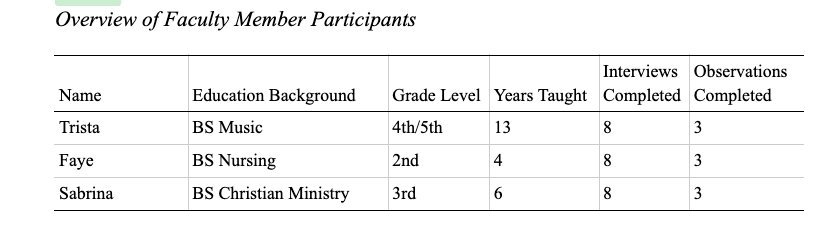
Despite the promise of discussion-based pedagogy in fostering democratic habits and critical thinking, classroom discussion remains underutilized in elementary social studies. This qualitative case study investigates how three elementary teachers learned and implemented discussion strategies introduced through a series of professional development (PD) sessions. Framed by theories of personal and personal practical knowledge, the study explores the relationship between teacher learning and practice. Drawing on interviews, classroom observations, and analytic memos, four interrelated factors emerged as critical to teacher uptake: preparation, commitment, relationship, and agency. Findings illustrate that teachers’ prior experiences, perceived control, and levels of support significantly influenced whether and how PD learning was integrated into instruction. Rather than assuming a linear relationship between exposure and implementation, this study emphasizes the complex and relational nature of teacher learning. It highlights the importance of sustained, content-specific PD grounded in trust, reflection, and contextually responsive mentorship. Ultimately, this research contributes to our understanding of how in-service teachers translate PD into practice and underscores the unique opportunities and challenges of fostering authentic discussion in elementary social studies classrooms.
Volume 17: April 2024
ISSN: 3070-6327
The Commonwealth of Virginia has seen an increase in the number of educators completing Alternative Teacher Certification Programs, contributing to the diversity in the teaching work force. The purpose of this study was to identify the perceptions of alternatively certified public K-12 teachers regarding their preparedness to teach. The researcher employed a semi-structured focus group protocol in conducting four focus groups with 23 participants who were provisionally licensed K-12 public school teachers in one school division in Virginia and represented elementary, middle, and high school teachers in both general and special education roles. Findings indicated that beginning teachers who have completed an alternative teacher certification program (ATCP) do not feel prepared for the teaching role. Additionally, study findings indicate that ATCP teachers perceive that their training did not adequately prepare them for core academic instruction, lesson planning, differentiation, classroom management, and working with parents, resulting in high levels of stress among provisionally licensed teachers. School leaders are tasked with ensuring equitable learning experiences for all students represented by a highly qualified, diverse faculty. Understanding the unique pre-service training and ongoing needs will help school leaders provide supports aimed at increasing their retention to address growing teacher shortages.
This study analyzes educators’ conceptions of STEM education at the beginning of an online graduate course for in-service teachers. It offers a qualitative thematic analysis of educators’ initial conception of STEM education and their roles as STEM educators through the use of concept maps and reflection statements. Conceptions of STEM varied greatly across the sample and fell into seven categories: (a) utilitarian, (b) acquisition of disciplinary knowledge, (c) activities and resources, (d) meaningful problem-solving experiences, (e) advocacy for systemic change, (f) buzzwords, and (g) educator’s role in STEM teaching and learning. This study reveals the complexity of educators' ideas of STEM and educator roles within STEM education. Using concept maps as formative assessments can better position teacher educators to provide structured reflection space for educators while aligning coursework and resources to better meet educators’ varied needs.
This paper outlines how four community colleges, and a large public university, collaborated to support over 80 paraprofessionals who sought to finish their bachelor’s degree and earn licensure. Funding from a statewide “Grow Your Own” initiative allowed the teacher educators at the community colleges and university to put in place structures to support non-traditional students, and each other, during the first year of this program. Lessons learned and next steps are highlighted.
As we consider the growing number of children from immigrant and refugee backgrounds that our schools serve, the importance of fostering anti-racist educators through teacher education is of the utmost importance. While anti-racist work can be a challenging and ongoing persona journey for every educator, engaging teacher education students with diverse children’s and adolescent literature can lead to meaningful self-reflection that can foster empathy and global competence. This article shares how online university course modules were designed, with funding from the Longview Foundation, to support pre- and in-service educators to engage with children’s and adolescent literature centered on the lived stories of immigrant and refugee families through scaffolded reading and thinking protocols as a model for using literature to encourage empathy and global competence with young learners. Pre- and in-service teachers reported several benefits, including an increased awareness of the importance of diverse literature, deepened self-reflection and empathy, and meaningful connections to classroom practice, thereby benefiting educators and their learners alike.
This paper outlines how four community colleges, and a large public university, collaborated to support over 80 paraprofessionals who sought to finish their bachelor’s degree and earn licensure. Funding from a statewide “Grow Your Own” initiative allowed the teacher educators at the community colleges and university to put in place structures to support non-traditional students, and each other, during the first year of this program. Lessons learned and next steps are highlighted.
This paper discusses a teacher residency model that has been collaboratively developed with a mid-sized urban school district struggling with high teacher turnover and a mid-sized university working to support our partner district and provide beneficial clinical experiences for our candidates. In this paper, we provide a brief overview of literature related to teacher recruitment and retention and teacher residency programs, describe our model and its success in recruiting diverse teacher candidates, and describe the successes and challenges of program implementation. We conclude with implications for future practice and research. We hope through this paper to share the benefits and challenges of our particular paid residency model as we work to strengthen approaches to recruiting, supporting, and retaining a diverse teaching pool.
This paper examines how male preservice teachers pursuing an elementary or middle level education certification perceive barriers and supports in their chosen major and future profession. To answer this question, the authors used a convenience sample of male undergraduate students at a mid-sized, private, liberal arts college. Sixteen male students completed an online 24-question Likert scale survey and nine of these students participated in a semi-structured focus group. Our results support current literature findings showing male preservice teachers experience barriers to the field related to gender identity. Additionally, findings highlight the significant role teacher preparation programs, cooperating teachers, and peer support systems play in the resiliency and success of male preservice teachers. Implications from this research include the need for teacher preparation programs to address these barriers and provide systems of support of this underserved population.
This paper outlines how four community colleges, and a large public university, collaborated to support over 80 paraprofessionals who sought to finish their bachelor’s degree and earn licensure. Funding from a statewide “Grow Your Own” initiative allowed the teacher educators at the community colleges and university to put in place structures to support non-traditional students, and each other, during the first year of this program. Lessons learned and next steps are highlighted.
This paper outlines how four community colleges, and a large public university, collaborated to support over 80 paraprofessionals who sought to finish their bachelor’s degree and earn licensure. Funding from a statewide “Grow Your Own” initiative allowed the teacher educators at the community colleges and university to put in place structures to support non-traditional students, and each other, during the first year of this program. Lessons learned and next steps are highlighted.